

Boosting Intelligence through Body Movement
In recent years, science has increasingly confirmed what many parents and educators intuitively know: a strong connection exists between physical activity and brain development. But what if we told you that movement isn’t just good for health, it’s also a powerful tool for boosting intelligence and learning in babies, toddlers, and children? In this article, we’ll explore how body movement plays a pivotal role in shaping cognitive abilities and offer insights on how to boost your baby’s intelligence from the very beginning.
Understanding the Link Between Movement and Intelligence
The brain and body are not separate entities operating in isolation. Movement stimulates the development of neural pathways, especially in the early years when the brain is growing most rapidly. When babies and young children engage in physical activity – —whether it’s crawling, walking, or climbing –- they are not only building muscles and coordination but also laying the foundation for higher-order thinking skills such as memory, attention, and problem-solving.
This concept is deeply rooted in neuroscience. The cerebellum, traditionally known for coordinating movement, is now also recognised for its role in cognitive processes like attention, working memory and language. Studies show that body movement helps enhance connections between the motor cortex and the prefrontal cortex, the area responsible for executive function, decision-making, and reasoning.
Movement is the Brain’s First Language
For babies, movement is their first way of interacting with the world. Long before they can speak or understand words, they explore and learn through physical experiences. Kicking, rolling, reaching, grasping, these are all critical brain-building activities.
When babies move, they are integrating their sensory systems, strengthening motor pathways, and forming the building blocks of intelligence. Research suggests that motor development is closely tied to cognitive development in infancy and early childhood. In fact, delayed or restricted motor activity can potentially impact a child’s learning capacity later in life.
How to Boost Baby’s Intelligence Through Movement

If you’re wondering how to boost your baby’s intelligence, the answer may be simpler than you think: let them move freely and often. Here are some practical strategies:
1. Encourage Tummy Time
Tummy time helps strengthen neck, back, and shoulder muscles essential for crawling and sitting up. It also promotes spatial awareness and visual tracking, both of which are crucial for early learning.
2. Allow Free Exploration
Avoid using equipment like walkers, bouncers, or jumpers that restrict natural movement. Instead, give your baby safe floor space to roll, pivot, crawl, and eventually cruise.
3. Use Rhythmic Movement
Rocking, swaying, bouncing, and dancing with your baby are not just comforting—they stimulate the vestibular system, which helps with balance and coordination. These movements are key to developing sensory integration and emotional regulation.
4. Create Movement-Based Play
Simple games like peekaboo, chasing bubbles, or rolling a ball back and forth provide both fun and brain stimulation. As your child grows, more complex physical games can boost planning, memory, and self-control.
The BrainFit Approach: Scientifically Designed Movement-Based Learning
BrainFit offers three core programmes, BrainFit Baby, BrainFit Junior, and BrainFit Scholar, which are each scientifically designed to support different stages of development using targeted movement-based strategies.
BrainFit Baby: Building Brains from the Beginning (Ages 9 – 36 months)
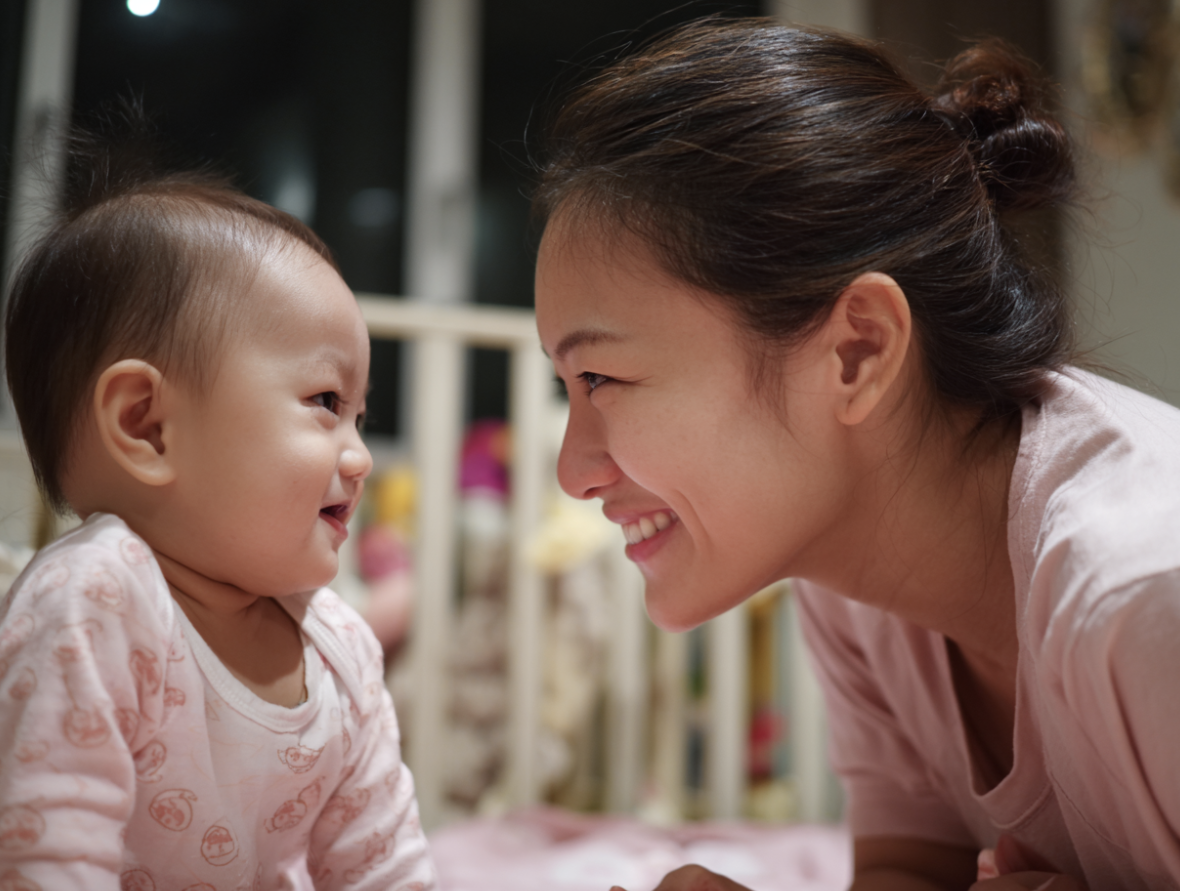
BrainFit Baby is our foundational programme for infants and toddlers. During this critical stage of life, the brain is highly plastic and responsive to stimulation. This programme uses a whole-brain purposeful-play approach to activate key brain systems through sensory-rich, movement-based experiences.
Each term focuses on different aspects of movement:
- Sensory activities that promote sensory integration, as well as balance and coordination.
- Eye-hand coordination games that build early attention, eye tracking and spatial skills.
- Pretend play that targets motor planning, imitation, body coordination and imagination.
- Musical play that incorporates body sequences to develop bilateral integration and movement memory.
The goal is to help parents understand how to boost their baby’s intelligence through everyday activities that engage both the body and brain.
BrainFit Junior: Bridging Movement and School Readiness (Ages 3–6)
As children transition from toddlerhood into early childhood, the need for structured brain training becomes even more crucial. BrainFit Junior is designed to prepare children for formal learning environments by enhancing cognitive, emotional, and physical readiness through play, movement, and science.
This programme focuses on:
- Gross motor skills: Jumping, balancing, crawling, and ball activities to promote attention, coordination and spatial skills.
- Fine motor control: Activities such as putty play and manipulating objects using tools to prepare the hands for writing and drawing.
- Language and memory games: Integrated with movement to stimulate expressive and receptive language pathways.
- Executive function practice: Through sequencing tasks, pattern play, and physical self-regulation games.
BrainFit Junior helps children don’t just enter school, they thrive in it. By using movement to develop attention, working memory, and emotional resilience, we create confident learners with a strong head start.
BrainFit Scholar: Cognitive Training through Intelligent Movement (Ages 7–18)
For school-aged children and teens, BrainFit Scholar offers a more advanced level of brain training, combining physical coordination exercises with high-level cognitive tasks.
It is grounded in the development of five essential brain pillars:
- Attention & Focus – Enhanced through movement sequences that require sustained effort and inhibition control.
- Visual & Auditory Processing – Boosted through multi-sensory activities that integrate seeing, hearing, and moving.
- Processing Speed – Strengthened by activities that demand fast reaction to boost speed of physical and thinking responses.
- Cognitive Flexibility – Supported by games that require fast and flexible thinking and responses.
- Memory – Developed through activities that train rhythm, timing and sequencing that support information organisation for better memory recall.
Every BrainFit Scholar programme is personalised using our CognitiveMAP Assessment, so each child trains according to their unique cognitive profile.
Children enrolled in BrainFit Scholar show measurable improvements not just in grades, but in classroom behaviour, confidence, and emotional maturity.
Movement and Synaptic Pruning: Why Timing Matters
In early childhood, the brain undergoes a process called synaptic pruning. At birth, a child’s brain has roughly 100 billion neurons and forms over a million new neural connections every second. Not all of these connections are useful, however.
Movement provides repeated, meaningful experiences that help strengthen useful neural pathways. At the same time, less-used connections are pruned away, a natural process that increases the brain’s efficiency. The more varied and rich a child’s movement experiences are, the more refined their neural networks become. This is why early physical experiences have such a profound effect on intelligence.
Emotional and Social Benefits of Movement
Beyond cognition, movement also plays a crucial role in emotional and social development. Activities that involve rhythm and coordination, such as clapping games or dancing, foster emotional bonding and social skills like turn-taking, imitation, and cooperation.
When children move together in synchronised activities, they also develop empathy and a sense of belonging. These social-emotional competencies are vital for school readiness and lifelong success.
Motor Skills and Academic Performance
Research consistently links motor skills, especially balance and coordination, with academic achievement. Children with strong gross motor abilities tend to have better attention spans, memory retention, and language processing.
Fine motor development, such as manipulating small objects or using scissors, is essential for tasks like writing, drawing, and hand-eye coordination in the classroom.
In other words, boosting intelligence isn’t only about reading to your child or teaching them numbers. It’s also about giving them opportunities to run, jump, dance, and play.
The Role of Play in Intelligent Movement
Play is a child’s natural way of learning. Through imaginative and physical play, children learn to plan, organise, take risks, and solve problems, which are all critical components of intelligence.
Some effective types of DIY intelligent movement play at home include:
- Obstacle Courses: Develop sequencing and spatial reasoning
- Simon Says: Enhances impulse control and listening skills
- Pretend Play with Action: Builds creativity and verbal expression
- Movement to Music: Improves rhythm, timing, and auditory processing
(DELETE) The BrainFit programmes integrate these kinds of play-based movement activities to ensure children not only have fun but also engage in meaningful brain-building tasks. (DELETE)
Technology and Sedentary Lifestyles: A Modern Challenge
In today’s digital world, many children spend hours sitting, whether watching TV, using tablets, or attending school. Unfortunately, this sedentary lifestyle can hinder both physical and cognitive development.
Limiting screen time and prioritising physical activity are essential steps parents can take to create a healthy learning environment. Movement isn’t just a break from learning; it’s part of the learning itself.
Practical Tips for Parents
Here are some quick, actionable tips on how to boost your baby’s intelligence through daily movement:
- Let babies crawl and roll rather than carry them everywhere.
- Introduce music and movement sessions in your daily routine.
- Use nature walks to explore different textures, sights, and sounds.
- Offer toys that require pushing, pulling, and problem-solving.
- Encourage dance, yoga, and movement-based games at home.
- Enrol in a movement-based enrichment programme like BrainFit.
Boosting Intelligence is a Journey, Start Early
The idea that body movement is essential for boosting intelligence is supported by science and echoed by educators and child development experts worldwide. Whether you’re caring for a newborn or raising a preschooler, remember that intelligence grows through experience, and movement is the first and most powerful experience your child has.
At BrainFit, we help parents take advantage of this critical window of development through guided, purposeful movement that builds a strong, resilient, and intelligent brain.
If you’re ready to empower your child with stronger cognitive foundations through movement, explore our programmes today.
Frequently Asked Questions
- Can movement really boost a baby’s intelligence?
Yes! Movement activates the brain’s sensory-motor pathways, which are critical for attention, memory, and language, core areas of intelligence. - What kinds of movement are most beneficial for babies?
Tummy time, crawling, reaching, rocking, and interactive play are excellent ways to stimulate brain development through movement. - Is too much time in a baby gear harmful?
Extended time in carriers, walkers, or seats can limit natural exploration. Babies need free space to move and discover how their bodies work. - At what age should movement-based learning start?
From birth! Even newborns benefit from gentle, guided movement. The earlier you start, the more effective it is. - How is BrainFit different from regular playgroups?
BrainFit combines play with neuroscience. Our structured programmes use specific movement patterns to strengthen brain areas tied to intelligence and learning.
Discover the BrainFit advantage and give your child the cognitive head-start they deserve.