
Building Brains from Day One
Every parent dreams of giving their baby the best start in life. While we often think of brain development as something that happens in school years, in reality, a baby’s brain starts building its critical pathways from birth. The first few years of life are when the brain is most flexible, making it the perfect time to introduce simple yet powerful brain training activities that shape future learning, thinking, and emotional resilience.
At BrainFit, we understand how early experiences can strengthen neural networks, and we believe that parents can play a vital role by incorporating active brain training into daily routines. Below, we explore 12 easy-to-do activities to train your baby’s brain every day.
1. Peekaboo and Object Permanence
Playing peekaboo isn’t just fun; it’s an effective brain training activity. This simple game helps babies grasp object permanence, the understanding that things continue to exist even when they’re out of sight. Strengthening this concept boosts cognitive flexibility and memory, laying a foundation for complex reasoning later on.
Ready to support your baby’s brain development? Discover how BrainFit Baby can provide guided, expert-designed activities tailored to your baby’s needs
2. Sensory Exploration
Babies are naturally curious. Providing various textures, temperatures, and shapes to touch and explore stimulates their sensory pathways. From feeling soft fabric to playing with water, these activities to train your brain refine neural connections responsible for processing sensory information, which supports attention and learning.
3. High-Contrast Visuals
Newborns have limited vision at birth. Showing black-and-white or high-contrast images can stimulate visual development and strengthen eye coordination. As their vision sharpens, transitioning to colourful patterns encourages further visual processing growth.
4. Singing and Rhymes
Singing lullabies or nursery rhymes introduces your baby to rhythm, language and sound patterns. Active brain training through music supports auditory processing, phonemic awareness, and later language development. Songs with repetitive phrases help babies predict what comes next, boosting memory and attention.
5. Tummy Time

Tummy time strengthens neck, back, and core muscles, essential for motor development. As your baby lifts their head and reaches for toys, they also train their brain to coordinate movement, balance, and spatial awareness, which are critical foundations for crawling, walking, and even future academic tasks like writing.
6. Face-to-Face Interaction
Babies are drawn to faces. Engaging in face-to-face interaction fosters social-emotional growth, strengthens bonding, and supports the development of mirror neurons. These neurons play a role in empathy, imitation, and understanding others’ emotions – all essential for emotional intelligence.
7. Story Time and Picture Books

Reading aloud, even to newborns, stimulates listening skills, language exposure, and vocabulary acquisition. Picture books with simple images engage visual processing, while listening to stories enhances auditory pathways, attention span, and memory.
Looking for more ways to give your child a cognitive head start? Explore our BrainFit Junior programme for preschoolers.
8. Cause-and-Effect Toys

Toys that light up, make sounds, or move when touched help babies understand cause-and-effect relationships. This active brain training teaches problem-solving and lays the groundwork for logical thinking. Everyday objects like rattles or musical mobiles can also be used.
9. Simple Problem Solving
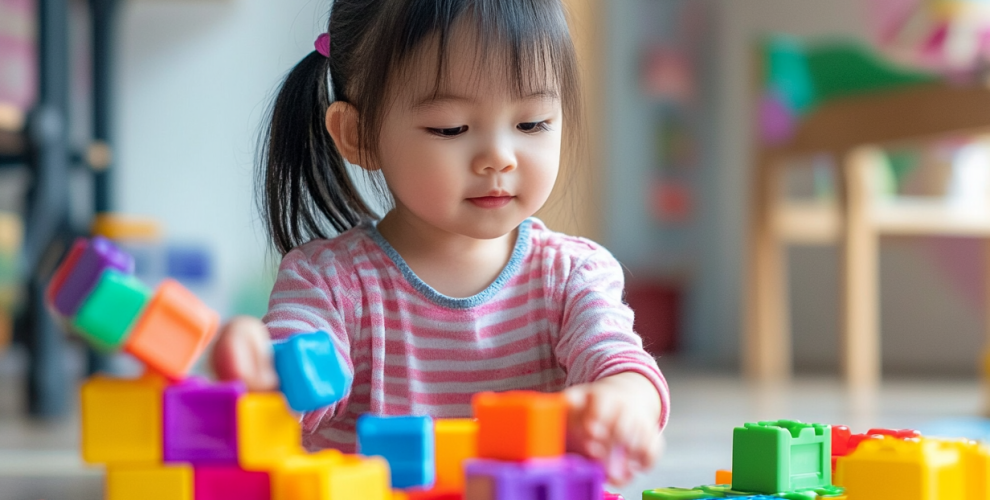
Offering safe challenges like stacking blocks or reaching for slightly out-of-reach toys encourages persistence and cognitive flexibility. These activities to train your brain foster problem-solving skills and help babies experience the joy of accomplishment.
10. Naming and Labelling
Throughout daily routines, name objects, actions, and emotions. “This is your bottle. You are drinking milk.” Such running commentary supports language development, strengthens word-object associations, and encourages verbal expression as your baby grows.
11. Mirrors and Self-Recognition
Placing your baby in front of a mirror helps build self-awareness. Although true self-recognition comes later, mirror play encourages visual attention, facial recognition and social interaction skills as your baby responds to their own reflection.
12. Movement and Dance
Gently moving your baby to music stimulates vestibular development (balance and spatial orientation) and supports sensory integration. As your baby grows, encouraging them to bounce, sway, or clap to rhythms strengthens coordination and executive functions like impulse control and focus.
Why Active Brain Training Matters
These simple daily interactions may seem small, but they serve as active brain training exercises, continuously stimulating various regions of your baby’s brain. During infancy, the brain undergoes rapid synaptic growth and pruning, where experiences literally shape the brain’s architecture. Repetition, engagement, and appropriate challenge levels make these activities powerful tools for optimising cognitive development.
Unlike passive stimulation, where a child merely watches a video or listens to background music, active brain training requires participation and interaction. This participation fuels stronger, more efficient neural connections that support learning, emotional regulation, and problem-solving throughout life.
The Science Behind Brain Training Activities
Brain training activities tap into the concept of neuroplasticity – the brain’s remarkable ability to reorganise itself through experience and practice. In the early years, neuroplasticity is at its peak. When parents provide enriched environments filled with meaningful, engaging activities to train your brain, they essentially strengthen the brain’s core capacities for attention, memory, processing speed, language, and executive functions.
For example, activities involving hand-eye coordination, such as reaching for toys or stacking blocks, activate multiple brain regions responsible for sensory processing, motor control, and problem-solving. Likewise, singing to your baby enhances language circuits, while face-to-face interactions nurture emotional intelligence and social cognition.
Structured Support: BrainFit Programmes
At BrainFit, we build on these natural brain training activities with our structured programmes that harness neuroscience to optimise brain development:
- BrainFit Baby offers parent-guided sessions filled with sensory play, movement, and bonding activities that target crucial brain areas during infancy. BrainFit Baby activities focus on a wide range of play types that boost both cognitive and thinking skills.
- BrainFit Junior programme focuses on building attention, language, self-management, executive function, motor and basic academic skills, laying a strong foundation for school readiness.
- BrainFit Scholar supports older children with personalised cognitive training to strengthen executive function, working memory, and processing speed as well as emotional management and academic thinking skills, ensuring they are school-ready and resilient learners.
Each programme is rooted in scientific principles, ensuring your child benefits from both spontaneous play and targeted cognitive training.
FAQ: Parents’ Common Questions on Baby Brain Training
Q1: How early should I start brain training activities with my baby?
You can begin from birth. Simple activities like eye contact, singing, and gentle movement stimulate neural pathways from the earliest days.
Q2: Can too much stimulation overwhelm my baby?
Yes, balance is important. Follow your baby’s cues and keep activities short, engaging, and fun. Babies naturally signal when they’ve had enough.
Q3: Do these activities guarantee higher intelligence?
While no activity guarantees a specific outcome, these experiences help optimise brain development, strengthen cognitive skills, and build learning readiness.
Q4: How often should I do brain training activities?
Consistency matters more than duration. Daily interactions, even for a few minutes, contribute significantly to your baby’s cognitive growth.
Q5: Can BrainFit help if my baby seems to have developmental delays?
Yes. Our personalised programmes offer targeted interventions based on your child’s unique needs, promoting optimal development at every stage.
Start Early, Build Strong
Your baby’s brain is developing faster than at any other point in life. By incorporating simple brain training activities into daily routines, parents can lay the groundwork for lifelong learning, confidence, and emotional well-being.
Even a few minutes of intentional interaction each day can spark lasting changes. As your child grows, these early experiences compound, creating a brain that’s not only wired for academic success but also equipped with the cognitive agility to thrive in a complex world.
If you’re ready to take the next step, BrainFit can guide you in creating a personalised brain training journey tailored to your baby’s unique developmental needs. Let’s build strong, resilient minds together, starting today.
Want personalised guidance to support your baby’s brain development? Contact BrainFit today and schedule your child’s first CognitiveMAP Assessment.
Reference Links
- Harvard University – Center on the Developing Child:
https://developingchild.harvard.edu/ - Zero to Three – Brain Development:
https://www.zerotothree.org/early-development/brain-development - The Urban Child Institute – Baby Brain Development:
https://www.urbanchildinstitute.org/why-0-3/baby-and-brain - American Academy of Pediatrics – Early Brain Development: https://www.aap.org/en/patient-care/early-brain-and-child-development/