
It’s not an exaggeration to say that movement literally helps babies’ brains grow. Moving their bodies—from gripping toys to figuring out how to hold their heads up, to clapping their hands and playing in the bath—contributes to the kind of brain development needed for more complex learning in the future. Brain training in Singapore, especially when it comes to encouraging babies to use movement to learn, is made easier when parents know what to do.
Check out the most effective strategies here:
Baby Brain Development
Here’s a fun fact for parents: Babies’ brains can already process information in the first trimester. Research suggests that as early as seven weeks old, a foetus’ brain already allows it to move in the womb and that in return, these movements strengthen the brain. It’s an amazing two-way process that kick-starts every child’s journey of learning.
It’s no wonder that babies that are just months old benefit from parent-led activities that focus on learning through movement. In simple terms, what happens is that every time a baby performs a new movement, the brain retains the experience. The more a movement is performed—say, wobbling across the room repeatedly to reach for a toy—the easier it is for the brain to remember it.
Repetition of a new movement means that eventually, it will become so easy to do that a baby no longer has to exert a ton of effort to perform it. Think of it as learning how to walk. Once, you too were a baby learning to stand up, then wobble, then walk. In time, repeated attempts to walk as a baby led your brain to master the movement that you now use to walk with confidence.
Interestingly, babies are actually able to figure out how to move their bodies by themselves, but it doesn’t hurt for parents to help them along the way. Brain training programmes can teach parents some useful techniques to turn the simplest activities into opportunities for babies’ brains to grow through movement.
Encourage hands-on play
One of the earliest forms of play parents will see their babies do is grabbing. They’ll reach for objects that interest them, grip them, and then pull the objects closer to them. This is a good thing. It can help babies discover and interact with their environment for the first time—by using their hands to examine textures, temperatures, objects’ weights, and more.
Regularly incorporate interactive toys
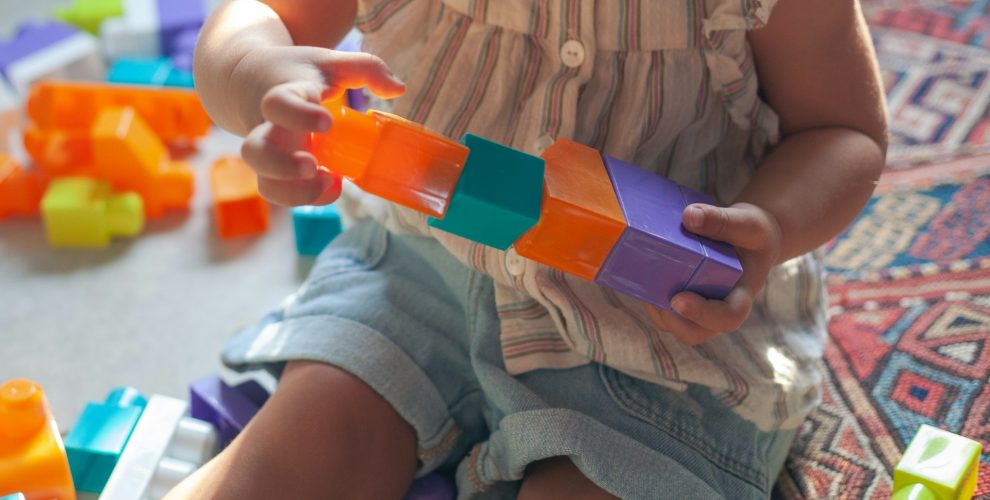
By the time a baby is 8-12 months old, they’ll be able to play simple games on their own. They will throw, roll, push, and do other creative things with baby-friendly toys like balls, blocks, rattles, and stuffed toys. These seemingly ordinary activities actually teach babies basic rules of cause and effect. They’ll soon learn that if they roll a ball, it’ll catch your attention, bounce off a wall, or knock other toys over. If they throw a rattle, it’ll make noise or light up. Activities like these are great for sparking curiosity, too.
Engage different muscle groups
It’ll be sooner than later before babies figure out that they have feet, legs, and a torso! They’ll be bouncing balls of energy that have learned to use all of their bodies before you know it. Turn this into a chance to engage other muscles and body parts.
For instance, to encourage babies to learn to stand up and crawl put their favourite toys a foot or two away from them. This way, they’re motivated to move towards them on their own. This kind of brain training in Singapore can help teach them that they can move towards an object independently. Similarly, putting babies on their bellies also helps them develop strength in their shoulders and back while teaching them they can move on their own by crawling.
Call babies by their names. At 6-9 months, babies should be able to recognise and respond to the sound of their names. It can encourage them to move their heads and necks by looking up or sideways at you and paying attention to you.
Make bath time an educational experience. Babies will slap water in their tubs with their arms and hands, and maybe kick around, too! Give them water-friendly toys that they can use to pour, sprinkle, dunk, or float—toys that encourage sensory and visual learning—and they’ll never want to get out of the water.
Support, don’t force
It’s easy to get excited about getting your baby to move more, especially with what movement can achieve. However, experts in brain straining caution parents about overdoing it. Listen to your baby’s cues to see if they’re ready for a challenge, need your assistance or are getting frustrated, and work from there. You don’t want to over-exert your baby and lead them to associate a certain activity with something negative!
Overall, parents are free to get creative with how to use movement for learning. But always make sure that you supervise playtime, use baby-safe toys and materials, and choose activities appropriate for your babies’ developmental stage.
Do you know that BrainFit can help babies as young as 9 months old with their brain fitness? Brain fitness refers to the overall well-being of the brain, ensuring good foundations for cognitive development. Learn how we can help your babies (9 to 36 months) optimise their brain development here.
References
- How Movement Helps Your Baby’s Brain, https://www.totsplay.co.uk/single-post/2018/12/11/how-movement-helps-your-babys-brain#, Accessed February 24, 2024
- Baby’s Brain Begins Now: Conception to Age 3, http://www.urbanchildinstitute.org/why-0-3/baby-and-brain, Accessed February 24, 2024
- Thinking and play: babies, https://raisingchildren.net.au/babies/play-learning/play-baby-development/thinking-play-babies, Accessed February 24, 2024
- 20 Ways to Boost Your Baby’s Brain Power, https://www.scholastic.com/parents/family-life/creativity-and-critical-thinking/learning-skills-for-kids/20-ways-to-boost-your-babys-brain-power.html, Accessed February 24, 2024
- 4 Ways to Encourage Motor Development in Baby’s First Year, https://www.nationwidechildrens.org/family-resources-education/700childrens/2020/07/4-ways-to-encourage-motor-development-in-babys-first-year#:~:text, Accessed February 24, 2024